
column


We held an environmental enrichment workshop! ~Part 2~
- Activity report

From June 3rd to 5th, 2026, a workshop on environmental enrichment* was held at the Kyoto Aquarium. 41 people from zoos and aquariums across Japan gathered to deepen their understanding of environmental enrichment over the three days.
*This refers to attempts to enrich and improve the living environment of animals based on the concept of "animal welfare."
Okamoto, a member of the organizing team and animal care staff, will report on the workshop.
Part 1 is here .
In the first part of this report, we covered the lectures and group work that took place on the first day of the workshop.
In the second part, we will show you how we actually implemented enrichment programs.
Once we have a rough plan for the items to be placed in the exhibition area, we'll start working right away!
We created toys and installations while checking the prepared materials. We worked together on the projects, incorporating materials that we hadn't used much at Kyoto Aquarium before. Since the participants were all active animal care staff working at zoos and aquariums, they seemed very familiar with using tools, and every team worked very smoothly. After completing safety checks, we immediately installed the creations in the exhibit area and observed the animals' behavior.


When the creations were placed in the display area, some individuals were very interested and immediately approached and started playing, while others were a little wary and watched from a distance. Still others only started playing little by little after some time had passed. Since each individual has a different personality, their reactions varied.
For the sea lions and seals, we created toys using fire hoses, something we had never done before. Many of them showed interest, poking and looking at them, and seemed unsure how to play with them, but they were clearly curious.
In the penguin exhibit area, we placed tubes wrapped in light-reflecting mirror stickers. Some penguins showed interest as they followed the reflected light as it moved. This provided a different kind of stimulation than usual and served as a real starting point for thinking about environmental enrichment.
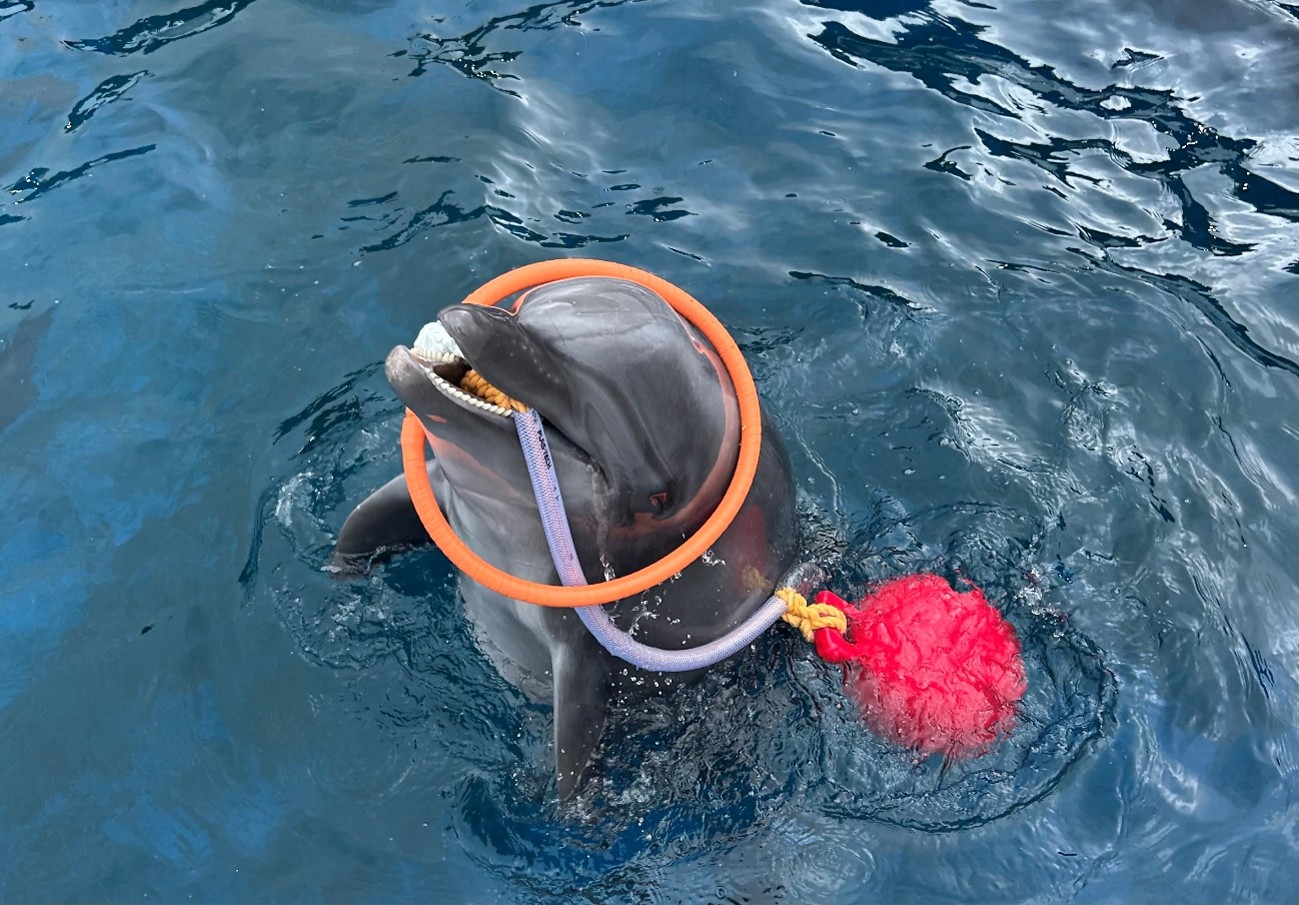
We created toys for the dolphins that they could hook onto their bodies or chew on, as well as toys with fish attached. Some of the dolphins loved them so much that they reacted as if they didn't want to give them back! It was a great joy for the animal care staff to see how the animals took an interest in each of them.


There is a method for approaching environmental enrichment called the "SPIDER model (Setting Goal, Planning, Implementation, Documenting, Evaluating, Readjusting)" which outlines the order in which to tackle the issue.
Although the evaluation period for this workshop was short, only two days, some teams were able to make improvements and even go through a cycle of readjustment.

Each team seriously considered, "What kind of toy would provide new and stimulating experiences that are difficult to obtain in everyday life?" and then brought their ideas to life. They created mechanisms that make sounds when moved, combined materials with different softness and thickness, and proceeded with production while giving full consideration to the safety of animals. Every team put a lot of creativity and ingenuity into their creations, and some wonderful things were made.
The second day quickly drew to a close, and after the practical sessions in the exhibition area, each team presented their work. As expected of zoo and aquarium staff, many participants were skilled at creating excitement, and every team's presentation showed that they had carefully observed the animals, captured their personalities and characteristics, and tailored their approach to each individual. There were many innovative ideas, and it was all very interesting. The presentations proceeded in a fun atmosphere, with lots of laughter.


The "Kyoto Aquarium Award," which determines the best team overall, went to the seal team. Since giant salamanders are synonymous with Kyoto Aquarium merchandise, we presented them with a giant salamander as their prize.

I was able to experience and learn about the entire process of environmental enrichment, and I also enjoyed interacting with other zoo and aquarium animal care staff members, engaging in lively conversations about various topics.
This workshop provided an opportunity to learn more about what interests the animals at Kyoto Aquarium and how they live, through observation and behavioral analysis.
It was fascinating to see the animals looking at and playing with the new toys, and I think it was a good stimulus for them as well.
Even after the workshop, the children were seen playing enthusiastically, and I feel that we have taken a small step closer to creating a better and more fulfilling life for animals.
We will continue to consider initiatives that will lead to improving the quality of life for animals.
Environmental enrichment in aquariums is still in its early stages, and there seems to be a lot to consider. I hope that we can continue to expand this circle of initiatives together so that animals living in aquariums and zoos all over the country can live better lives.

Finally, I would like to express my sincere gratitude to everyone who participated in the workshop, SHAPE-Japan and Kyoto City Zoo for their efforts in planning, implementation, and operation, and to everyone else who was involved in the workshop.
Related Columns
-
 Activity report
I went to Cape Town, the home of the African penguin! ~Part 1~
-
 Activity report
I went to Cape Town, the home of the African penguin! ~Part 2~
-
 Activity report
We held an environmental enrichment workshop! ~Part 1~


Column List


